Racing and competitions
Motorsport has a unique way of turning an everyday passion for cars into something extraordinary. Whether you have watched races on television, attended a local track day, or simply wondered what it takes to compete, the world of racing and competitions is far more accessible than most people assume. Contrary to popular belief, you do not need a factory-backed team or a six-figure budget to get started. Across the United States, the United Kingdom and other English-speaking countries, grassroots racing organizations welcome complete beginners with street cars, modest budgets and a willingness to learn.
This page serves as your starting point for understanding the landscape of automotive racing and competitions. It explains the main disciplines, how sanctioning bodies work, what it realistically costs to begin competing, and the steps you can take to move from spectator to competitor safely and legally.
What Are Racing and Competitions in Motorsport?
At its core, motorsport competition is any organized event in which drivers or teams are timed, ranked or raced against one another under a common set of rules. The defining feature is regulation: every sanctioned event runs under a rulebook that governs vehicle preparation, driver licensing, safety equipment and on-track conduct. This is what separates legitimate competition from informal street activity, which is illegal and dangerous in virtually every jurisdiction.
Competition generally takes two forms:
- Wheel-to-wheel racing, where multiple cars share the track at the same time and position at the finish line determines the result.
- Time-based competition, where drivers individually attack the clock, as in time trials, hill climbs, rallies and autocross.
Both formats reward the same fundamental skills: car control, consistency, track knowledge and disciplined decision-making under pressure.
The Major Disciplines of Automotive Competition
The term « racing » covers a remarkably diverse set of disciplines, each with its own skills, vehicles and culture. Understanding these categories helps you choose the entry point that best matches your budget, location and temperament.
Circuit Racing
Circuit racing takes place on permanent road courses or oval tracks. It is the most visible form of motorsport, encompassing everything from international championships like Formula 1 to club-level racing run by organizations such as the Sports Car Club of America (SCCA) in the United States or Motorsport UK-affiliated clubs in Britain. Wheel-to-wheel racing demands strong racecraft: overtaking, defending a line, managing tire wear and understanding braking zones.
Karting
Karting is widely regarded as the foundation of racing. Nearly every professional driver began in karts, and the discipline remains the most affordable way to learn racecraft in a competitive environment. Rental kart leagues at local tracks require no equipment purchase at all, making karting the single easiest entry point for a complete beginner.
Rally and Rallycross
Rallying takes place on closed public roads and gravel, snow or tarmac stages, with a co-driver reading pace notes. It emphasizes adaptability and precision over pure lap speed. Rallycross, by contrast, runs on short mixed-surface circuits and offers close, spectator-friendly racing. Organizations like the American Rally Association and regional rally clubs run entry-level classes specifically for novices.
Autocross and Solo Racing
Autocross (known as Solo in SCCA terminology) is arguably the most beginner-friendly discipline. Drivers navigate a cone course laid out in a parking lot or on a small circuit, one car at a time, against the clock. Costs are low, cars are typically daily drivers, and the primary risk is hitting a cone rather than a barrier. Many competitors run their first event with the car they drove to the venue.
Drag Racing
Drag racing is a straight-line acceleration contest over a quarter mile or eighth mile. NHRA-sanctioned tracks across North America host weekly « test and tune » nights where anyone with a street-legal car and a helmet can make passes. It rewards reaction time, launch technique and mechanical consistency.
Time Trials and Track Days
Time trials and high-performance driving events (HPDEs) occupy the space between driver education and full racing. Participants run open sessions on track with no wheel-to-wheel contact, progressing through skill levels at their own pace. For many enthusiasts, this is the ideal first step: genuine track experience without the pressure or cost of door-to-door racing.
Endurance and Simulator Racing
Endurance racing tests reliability, fuel strategy and driver stamina over hours rather than minutes, with amateur series like ChampCar and Lemons offering low-budget endurance racing in inexpensive cars. Meanwhile, sim racing has matured into a legitimate competitive discipline, with organized online leagues and prize structures. For drivers on tight budgets or in areas without a nearby track, a simulator rig is a realistic pathway into competitive motorsport.
How Sanctioning Bodies and Licensing Work
Every legitimate competition operates under a sanctioning body — an organization that publishes the rulebook, issues licenses, inspects vehicles and officiates events. Familiar names include SCCA and NASA in the United States, Motorsport UK in Britain, and FIA-affiliated federations internationally. Before entering any event, you will need a competition license or, for entry-level disciplines like autocross, simply a valid driver’s license and membership.
The typical licensing progression looks like this:
- Join a national or regional sanctioning body and your local club.
- Attend driver schools or licensing courses required for wheel-to-wheel racing.
- Obtain a novice license and complete any observed sessions.
- Upgrade to a full competition license after meeting event participation requirements.
Entry-level disciplines skip most of this bureaucracy, which is precisely why autocross, track days and drag nights are recommended first steps.
What Does It Cost to Start Racing?
Costs vary enormously by discipline, but transparency helps set realistic expectations. Consider a realistic spectrum:
- Autocross: a few hundred dollars per season, covering entry fees, a helmet and basic consumables — often using your existing car.
- Track days and time trials: several hundred dollars per event once you include track fees, fuel, brake pads and possibly insurance.
- Club racing: typically thousands per season, factoring in a dedicated car, trailer, tires, licensing and maintenance.
- Professional categories: budgets reaching six or seven figures, which is why the term « grassroots racing » exists at all.
A useful analogy: think of motorsport as a pyramid. The broad, affordable base — karting leagues, autocross, HPDEs — supports a much narrower peak of professional racing. Most enthusiasts compete happily for decades within the base, and the skills are identical in kind, only different in degree.
Safety: The Non-Negotiable Foundation
Motorsport’s excellent modern safety record is the result of strict equipment standards and a culture of preparation. Before your first event, you will need at minimum:
- A certified helmet meeting the standard specified in the event rulebook (such as Snell or FIA ratings).
- Vehicle inspection to rule out leaks, loose battery mounts, worn brakes and unsafe tires.
- Appropriate clothing — many organizations require long sleeves and closed shoes, with fire-rated suits required as you move up the ladder.
Beyond equipment, safety is behavioral: attending the mandatory driver briefing, learning flag meanings, respecting track limits and never pushing beyond your competence on an unfamiliar circuit. A skilled driver at ninety percent is faster and safer than an aggressive one at one hundred.
How to Compete in Your First Event: A Practical Roadmap
If you are ready to move from spectator to participant, this sequence removes most of the guesswork:
- Choose a discipline that matches your budget and nearest venue — check regional club calendars for autocross, track days or kart leagues.
- Read the event rulebook and prepare your car accordingly, or simply rent a kart for your very first outing.
- Register early, as entry-level events frequently fill up.
- Bring the basics: helmet, tire pressure gauge, water, sunscreen, torque wrench and your vehicle’s tools.
- Ask for instruction. Novice programs, ride-alongs and classroom sessions exist precisely for first-timers, and instructors are uniformly welcoming.
- Focus on learning, not winning. Your first goal is smoothness and consistency; lap times improve naturally from there.
Consider a fictional but typical example: a driver with a standard compact hatchback enters a local autocross in stock class, finishes mid-pack, and over two seasons progresses to a regional championship in a prepared class. This pathway — cheap, safe and genuinely competitive — is repeated thousands of times each season across grassroots motorsport.
Frequently Asked Questions
Do I need a special car to start racing?
Not necessarily. Autocross, track days and drag nights all accept ordinary street cars, subject to a basic safety inspection. Dedicated race cars only become necessary in wheel-to-wheel club racing and above.
Is a racing license required for all events?
No. Entry-level disciplines typically require only a valid road license and event registration. Full competition licenses become mandatory for wheel-to-wheel club racing and sanctioned road rallies.
Can racing damage my daily driver?
Any performance driving accelerates wear on brakes, tires and fluids. Most newcomers accept this as part of the cost, while others eventually buy a dedicated track car. Proper maintenance between events keeps the risk of serious damage very low in non-contact disciplines.
How long does it take to become competitive?
Most drivers need a season of regular participation to feel consistently fast. The learning curve is steep at first and then gradual — which is part of what makes motorsport rewarding for decades.
Where to Go From Here
Racing and competitions form a spectrum, not a binary choice between spectator and professional. Your journey can begin this weekend with a helmet, a full tank of fuel and an entry form at the nearest autocross or kart track. Explore the articles in this category to go deeper on each discipline, vehicle preparation, licensing and race-day strategy — each one is written to help you make informed decisions at every stage of your motorsport journey.
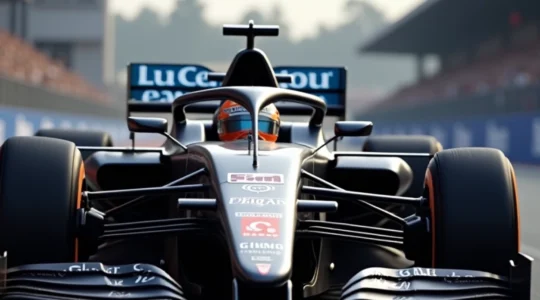
Car engine performance: A critical factor in competitive racing success
In the high-octane world of competitive racing, car engine performance stands as the cornerstone of success. The relentless pursuit of power, efficiency, and reliability drives teams to push the boundaries of engineering and innovation. From Formula 1 to NASCAR, the…
Lire la suiteWhat are the key features that make racing cars unique?
Racing cars represent the pinnacle of automotive engineering, pushing the boundaries of speed, performance, and technology. These high-octane machines are a far cry from your everyday road vehicles, boasting an array of specialized features designed to shave milliseconds off lap…
Lire la suite
Car circuits: the ultimate test of driver skill and vehicle capabilities
Car circuits represent the pinnacle of automotive performance, where the interplay between driver skill and vehicle engineering reaches its zenith. These carefully designed tracks push both human and machine to their absolute limits, creating an exhilarating spectacle that has captivated…
Lire la suite
Why are sporting events crucial for the growth of motorsports?
Sporting events play a pivotal role in driving the growth and popularity of motorsports. These high-octane spectacles not only showcase the pinnacle of automotive engineering and driver skill but also serve as powerful catalysts for industry expansion. From Formula 1…
Lire la suite